
Find the leak. Open as little as possible.
The craft in leak work isn’t the repair — it’s pinpointing the leak so precisely that the repair stays small. We locate before we open, and we show you the evidence.
Start with the symptom.
A water bill that jumped with no change in habits
The most common first sign. Your meter can confirm it in ten minutes — we’ll show you how, or check it for you.
Sound of water running when everything’s off
Pressurized supply leaks hiss or rush continuously. Where you hear it loudest is a clue, not an answer — sound travels along pipe.
A warm spot on the floor
The classic hot-side slab leak sign in slab-on-grade homes — common in parts of Rohnert Park and newer Santa Rosa subdivisions.
A lush green stripe in the lawn
Yard service-line leaks water the grass above them. In a dry Sonoma summer, the stripe gives the line away.
Stains, bubbling paint, or a musty smell
Drain-side leaks show up slower — as damage rather than sound. Worth tracing before the repair gets bigger.
Why it happens here
Supply leaks come from age, water chemistry, pressure and movement — galvanized rusting through, copper pinholes, fittings stressed by high pressure where a regulator has failed. Sonoma County’s clay-heavy soils swell and shrink through the wet/dry cycle, which works on buried service lines year after year.
How we diagnose it
We confirm the leak exists (meter test), isolate which system it’s on (supply vs. drain, hot vs. cold, house vs. service line), then pinpoint it — acoustic listening, pressure isolation, and thermal evidence where it helps. The goal is a repair measured in one opened section, not an exploratory demolition.
Repair or replace — our honest rule
One leak in otherwise healthy pipe gets a clean spot repair. A leak that’s the third of its kind in two years changes the conversation — sometimes a reroute or a planned repipe is cheaper than the pattern you’re on. We’ll lay out both paths with real numbers and let you choose.
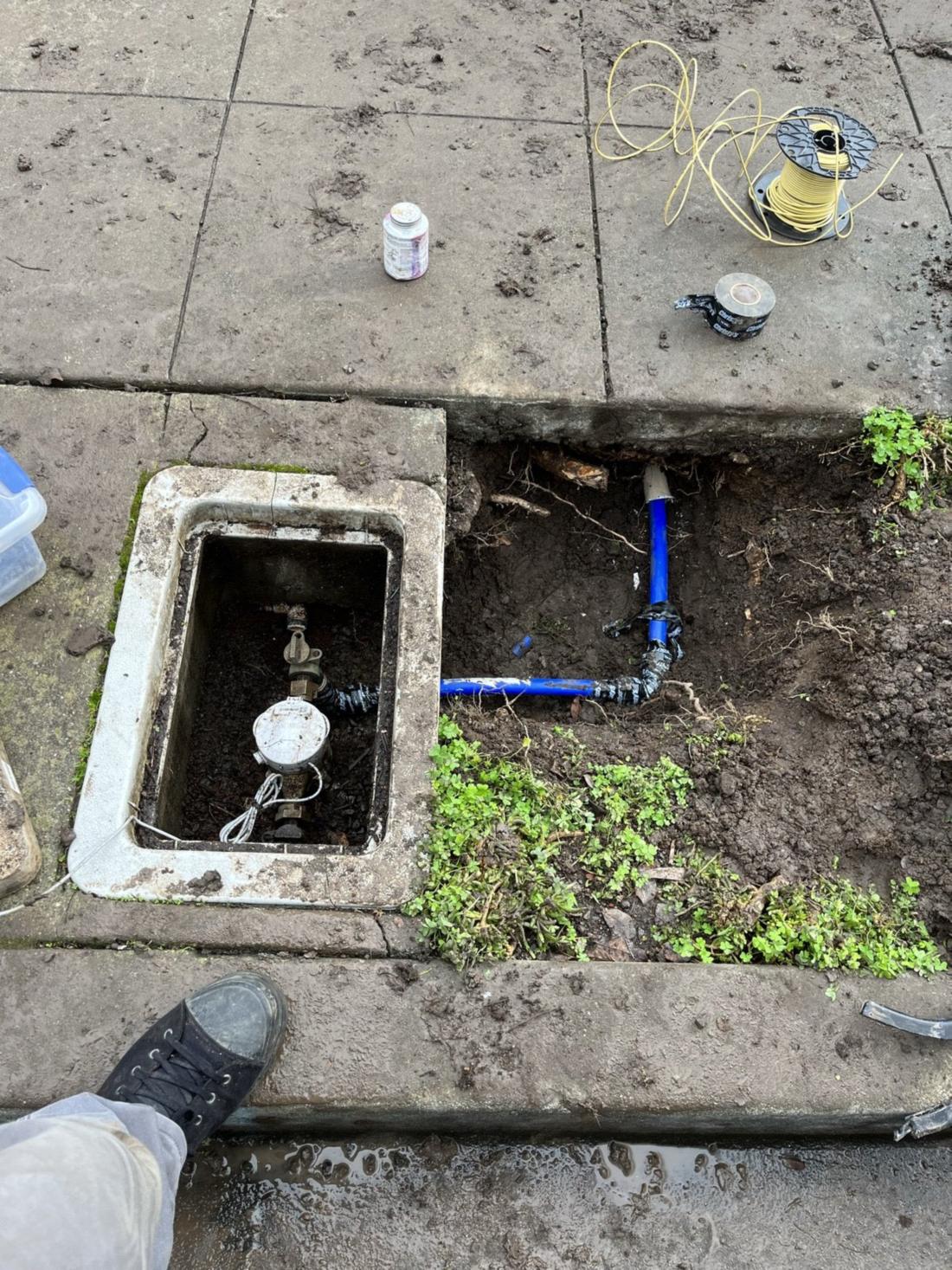
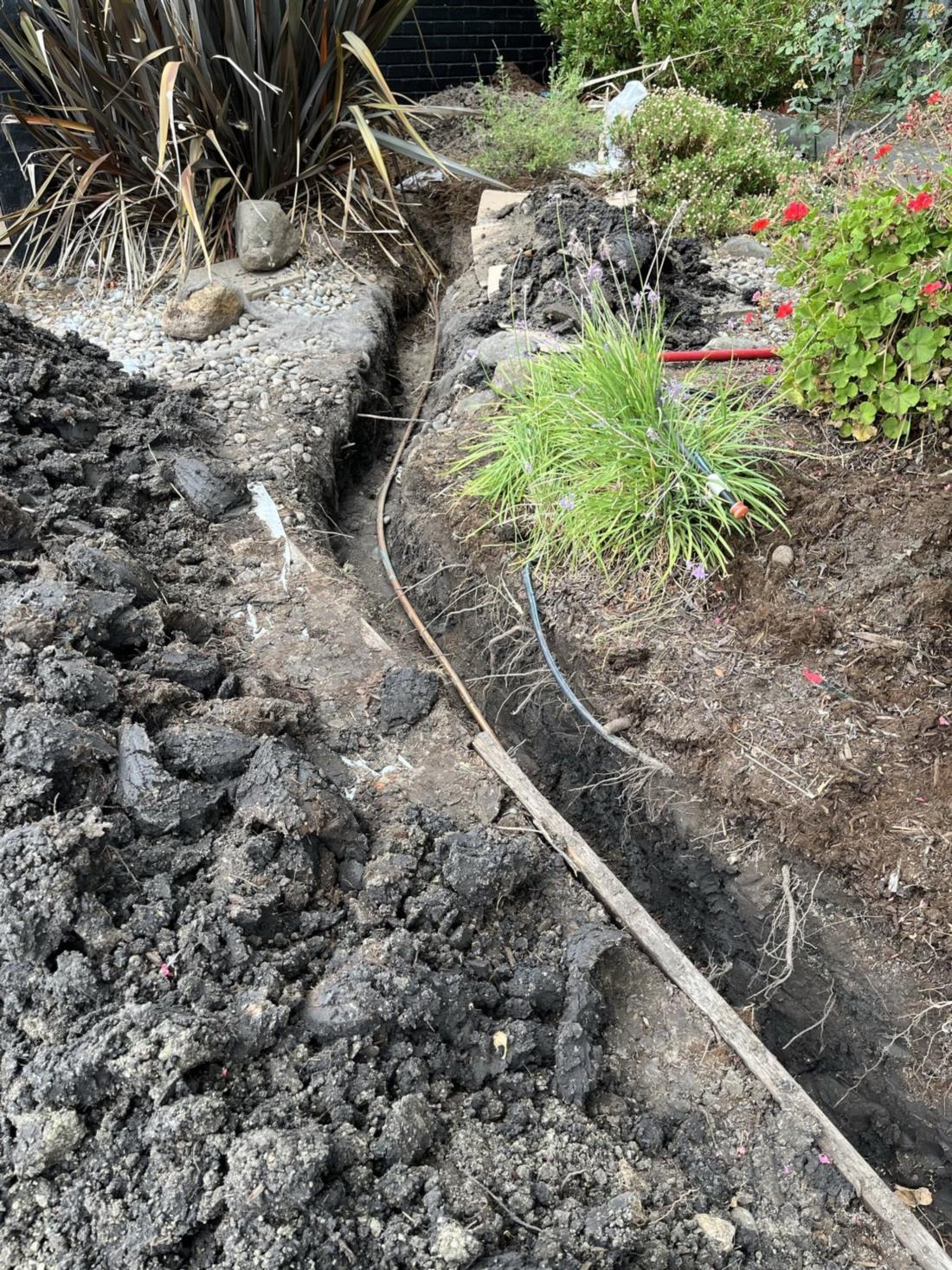
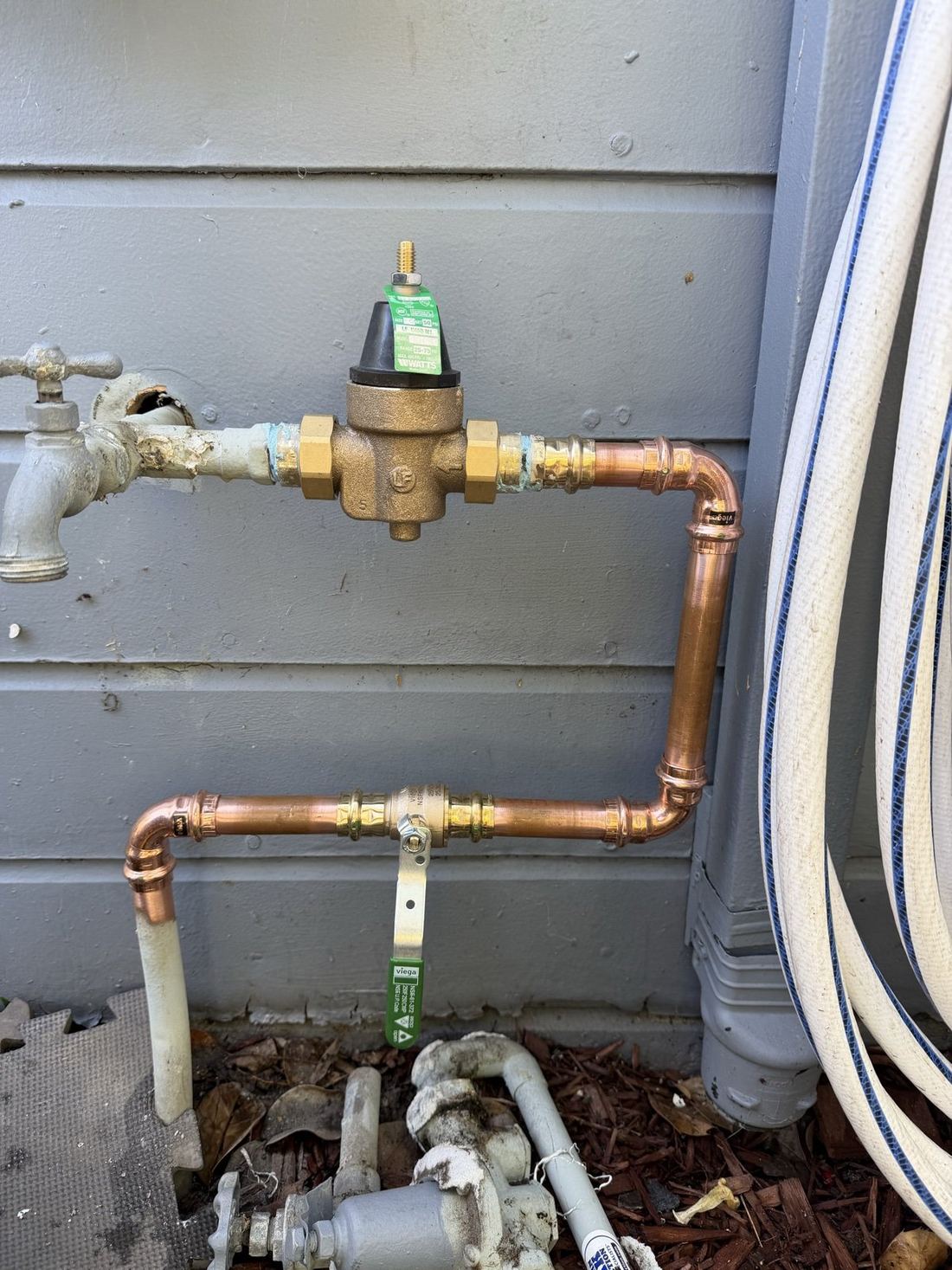
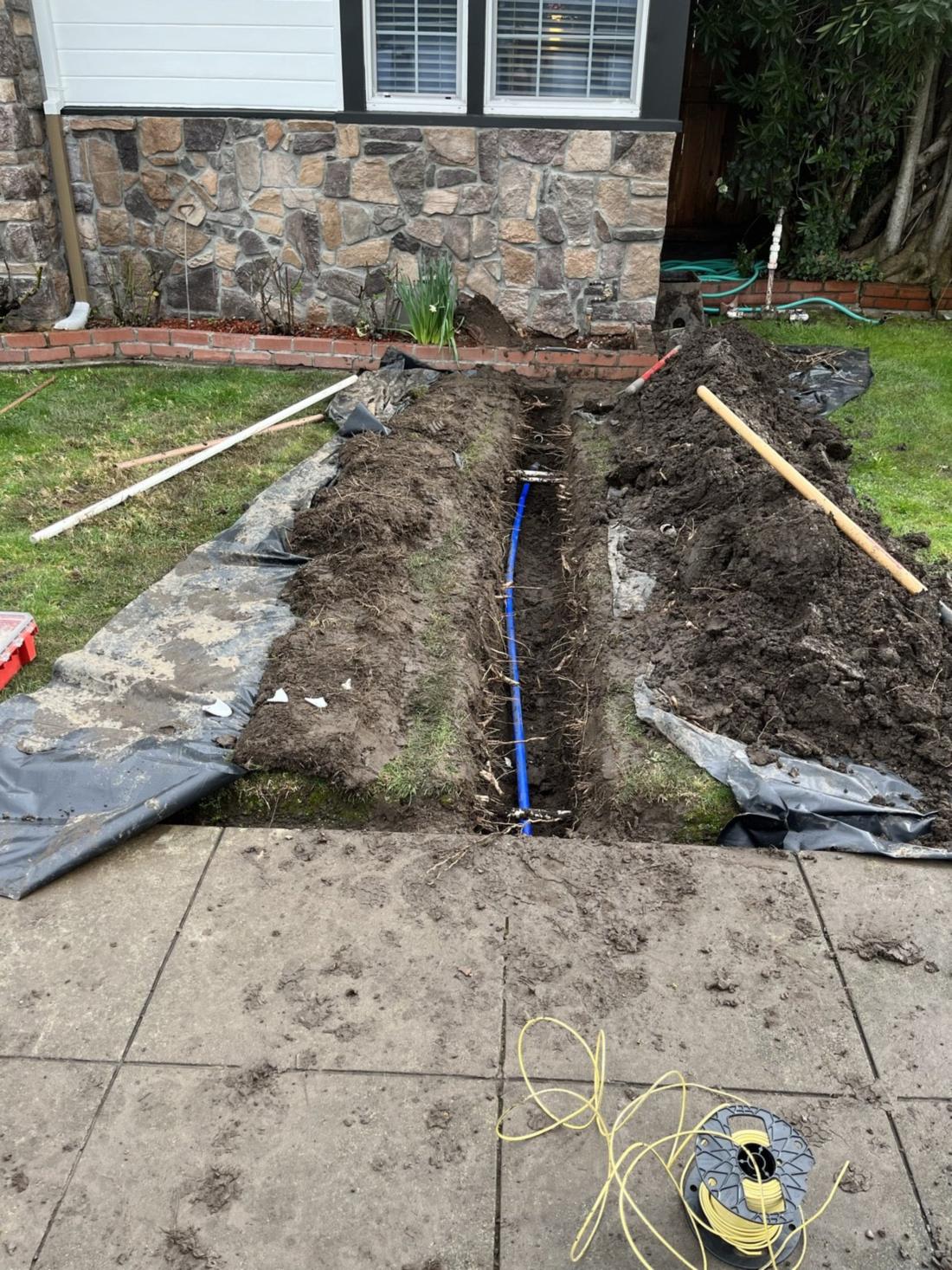
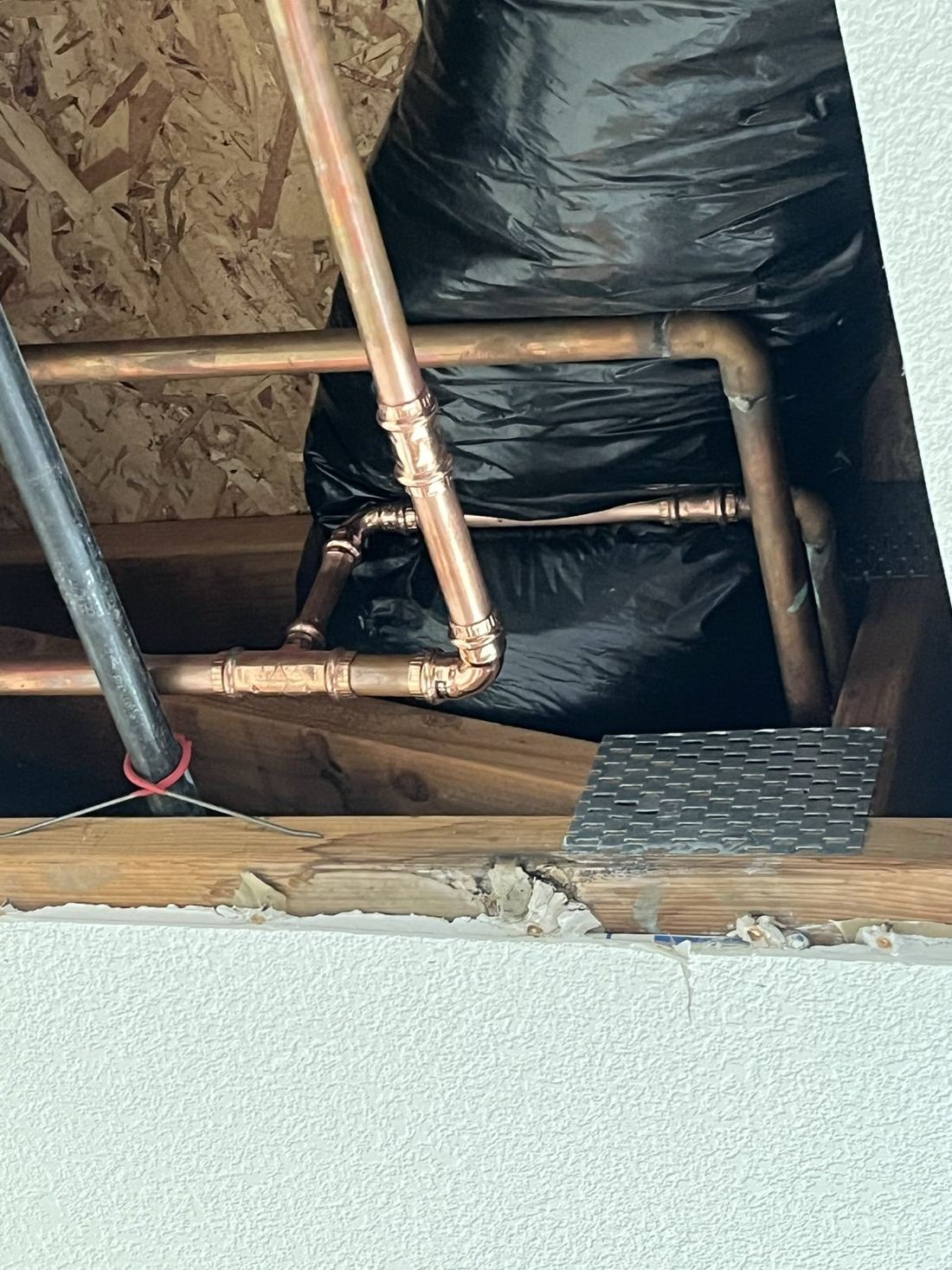
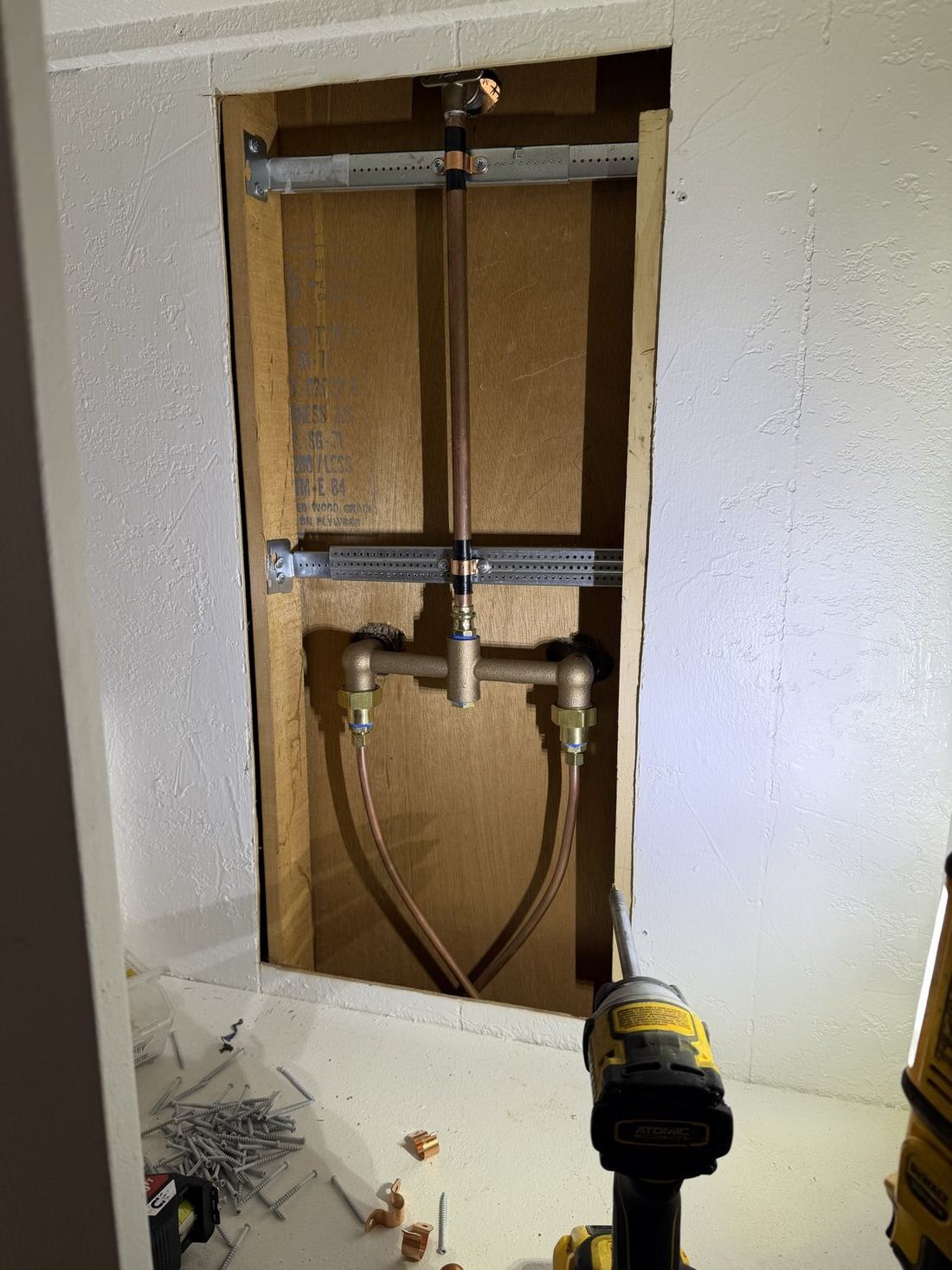
From our job sites, not a stock library.
Questions homeowners actually ask
How can I check for a leak myself?
Turn off every fixture and appliance that uses water, then watch your water meter for ten minutes. Movement means water is going somewhere. The small triangle or star dial on most meters is a low-flow indicator — if it’s turning with everything off, call us and don’t let it run for weeks.
What causes low water pressure?
Low pressure doesn’t automatically mean you need new pipes. The usual causes, roughly in order: a failing pressure regulator, a partially closed or failing valve, corroded galvanized pipe, or an active leak bleeding the system. We start by identifying where the pressure is dropping and why — then fix that, not everything.
Is a slab leak a disaster?
It’s serious, but it’s rarely the jackhammer catastrophe people fear. Many slab leaks are best fixed by rerouting that line overhead and abandoning the section under the slab — no concrete opened at all. Location and layout decide it, and that’s what the detection visit establishes.
My bill is high but I can’t hear anything — is it still a leak?
Possibly — toilets are the silent culprits. A flapper leaking into the bowl can waste hundreds of gallons a day without a sound. Food-coloring in the tank is the classic test. If the toilets pass, the meter test tells us whether to look further.
Related services
Serving Santa Rosa · Sebastopol · Windsor · Healdsburg · Petaluma · Sonoma — see the full service area.
Dealing with a leak detection problem?
Tell us what you're seeing — we'll tell you what it probably is, and what it takes to fix it right.