
No hot water? Start with a straight answer.
A water heater problem doesn’t automatically mean a new water heater. We diagnose what actually failed, explain it in plain language, and only recommend replacement when repair stops making financial sense.
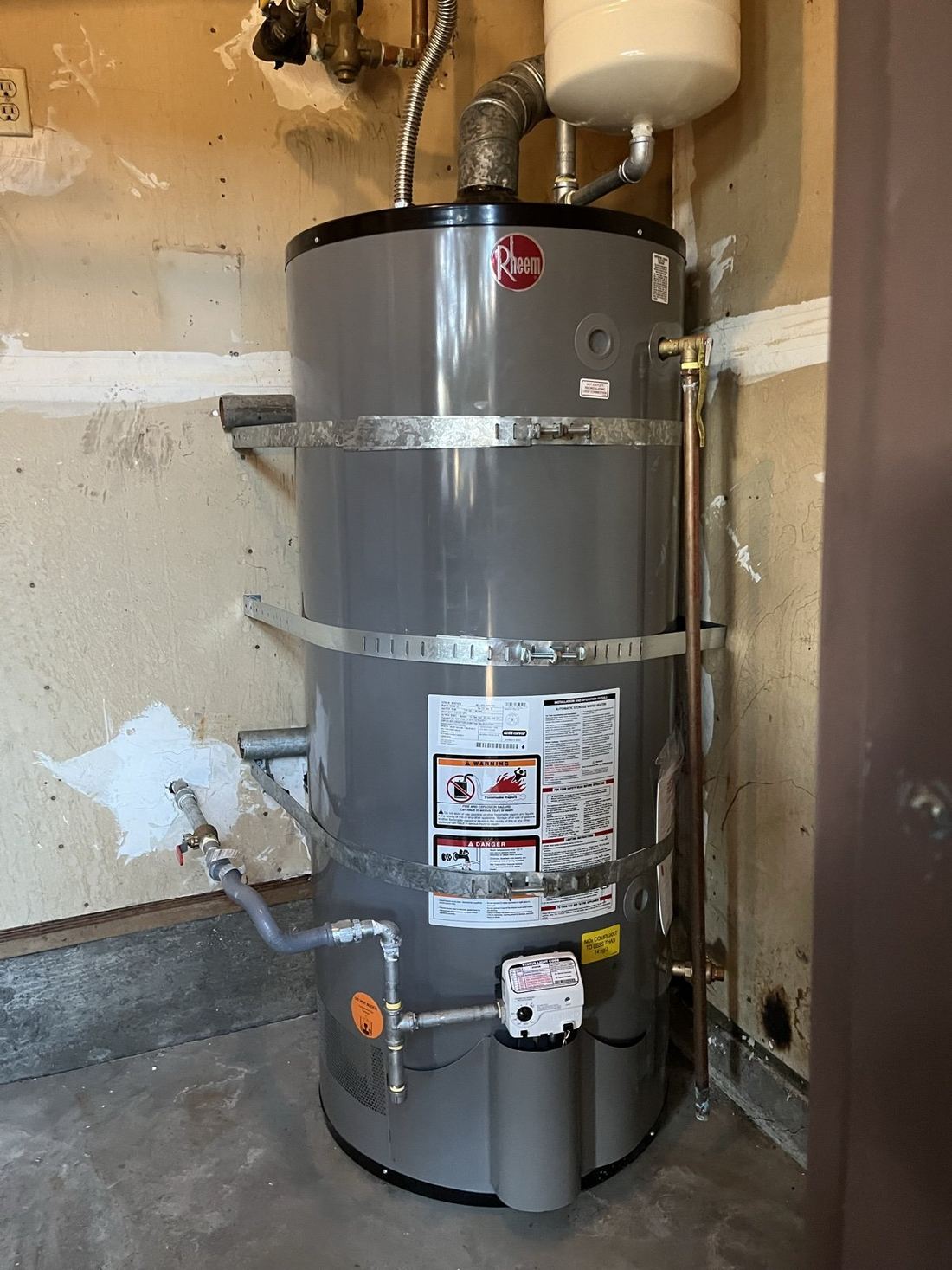
Start with the symptom.
Water won’t get hot
On gas heaters this is often a failed thermocouple, gas control valve, or pilot issue — all repairable. On electric, usually an element or thermostat.
Hot water runs out fast
A failed dip tube or sediment buildup can cut usable capacity long before the tank itself is done.
Rusty or rotten-egg smelling water
Often the anode rod — a replaceable part designed to corrode so your tank doesn’t.
Rumbling or popping sounds
Sediment on the tank bottom flashing water to steam. Flushing can help if it’s caught early.
Water around the base
A leaking valve or fitting is repairable. A leaking tank seam is not — that’s when replacement is the honest answer.
Why it happens here
Most tank water heaters in Sonoma County last 8–12 years. Sediment, a spent anode rod, and thermal cycling do the damage. Where the water is harder, tanks fail on the early side of that range — which is why two identical heaters in two different neighborhoods can have very different lives.
How we diagnose it
We check the whole system, not just the tank: gas supply and venting, temperature and pressure relief, expansion tank, seismic strapping, water pressure, and the age and condition of the unit itself. You get a clear verdict — what failed, what it means, and what your options actually are.
Repair or replace — our honest rule
Our rule of thumb is honest math: if the heater is under 8 years old and the failed part is replaceable, repair usually wins. If the tank itself is leaking, or the unit is past 10 years and a repair would cost a meaningful fraction of replacement, we’ll tell you to put the money toward a new one — and we’ll say so plainly either way. California code also matters: a replacement must be brought up to current strapping, venting and expansion-tank requirements, and we handle all of it.
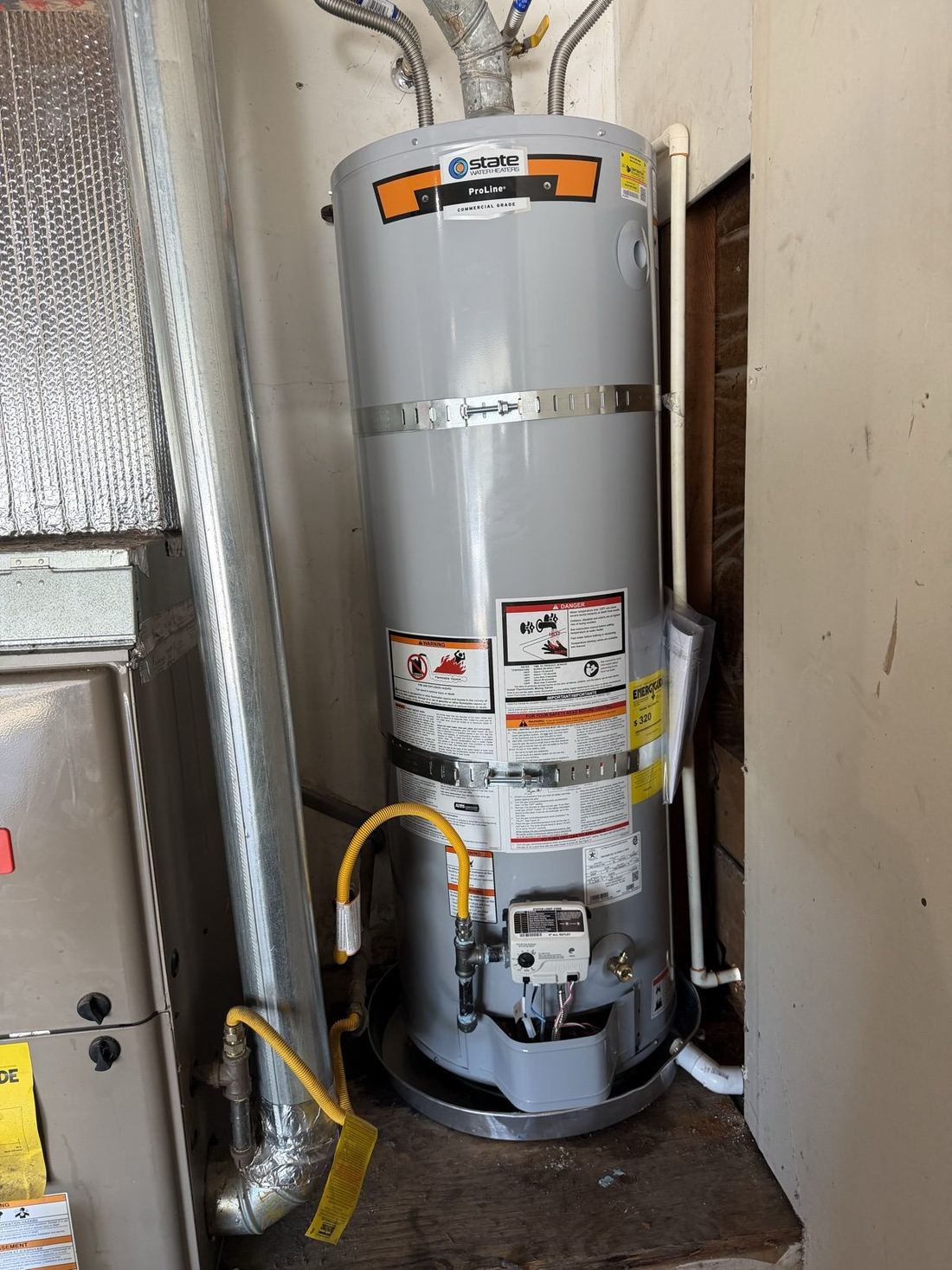
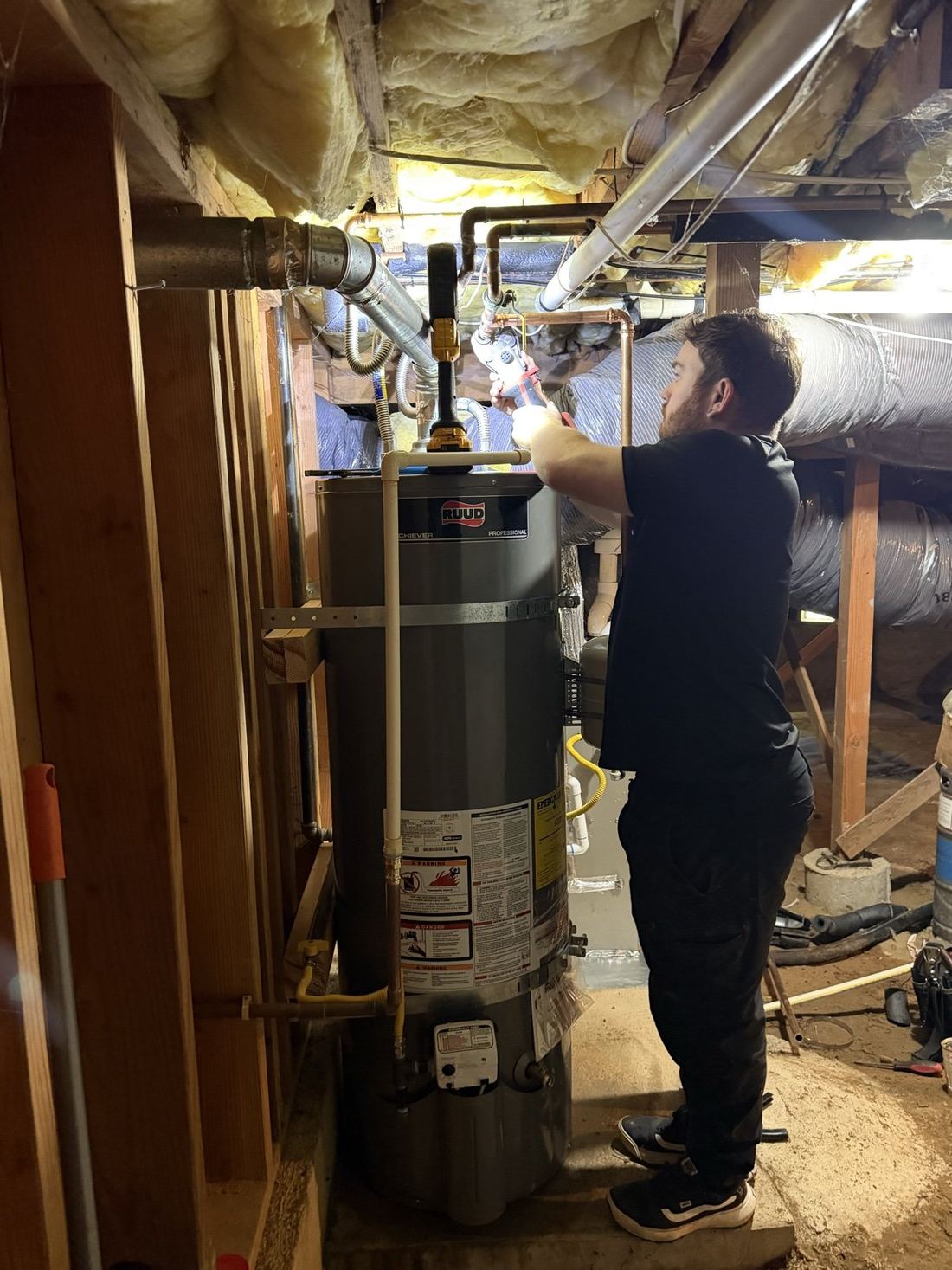
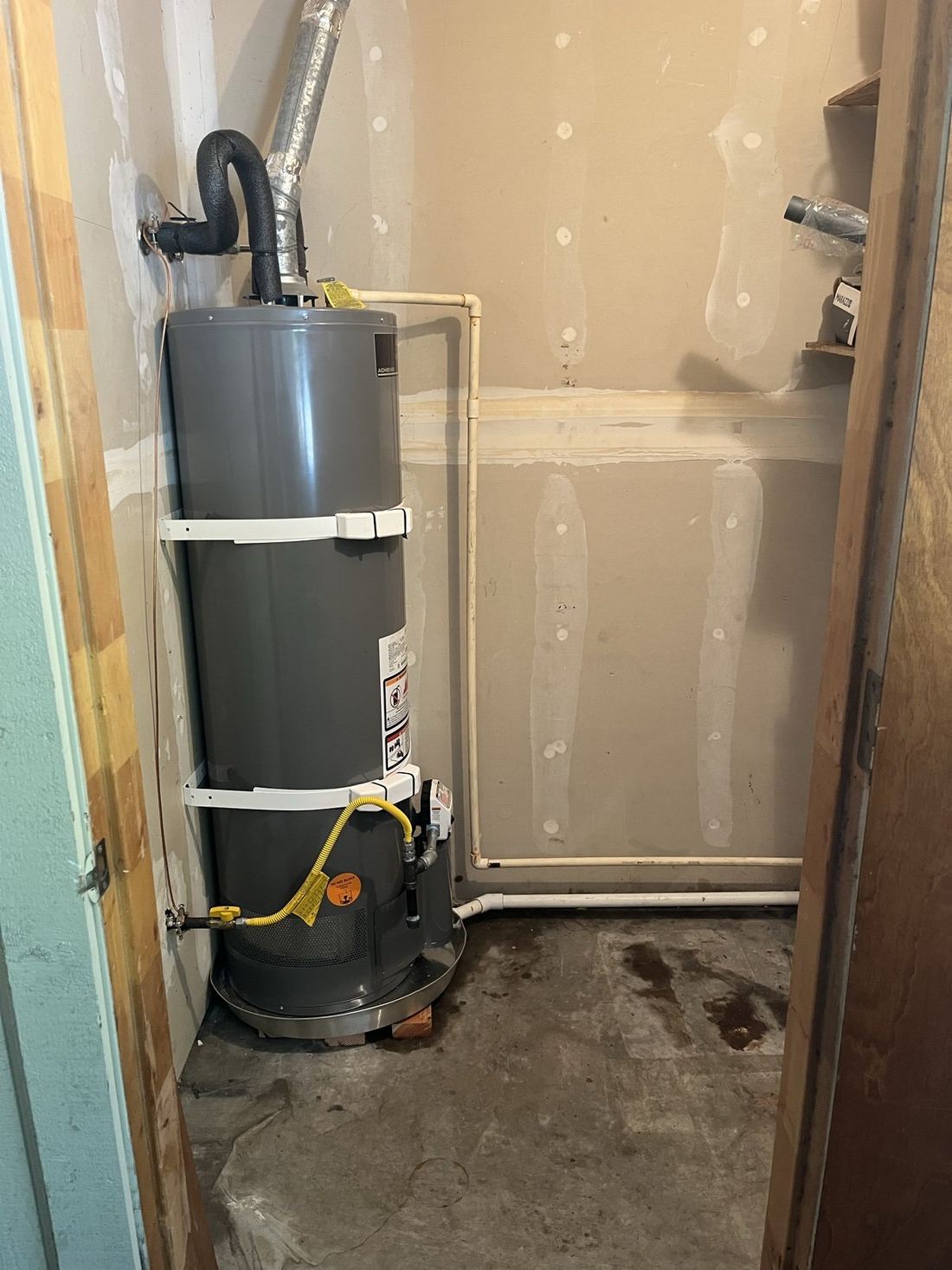
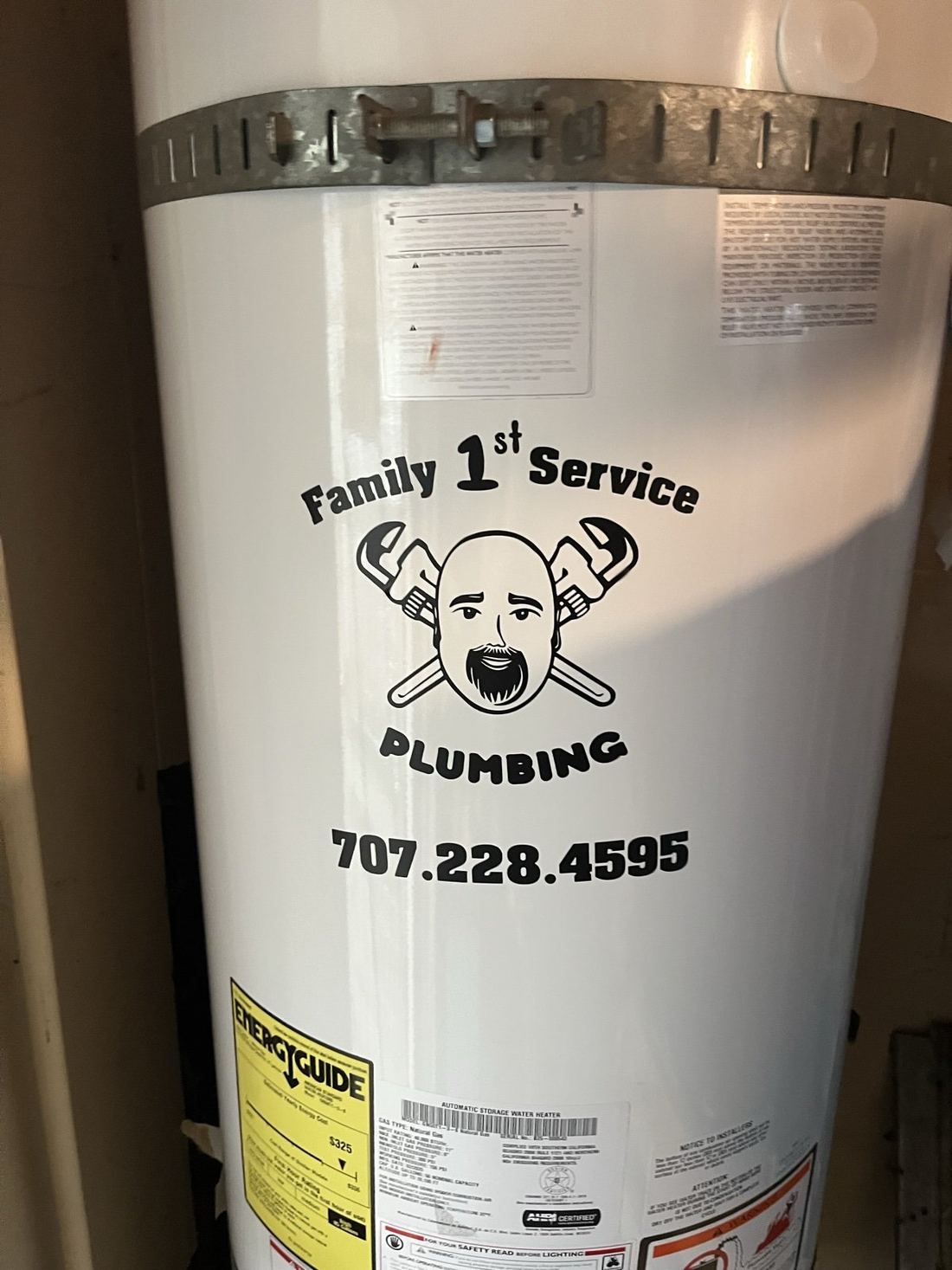
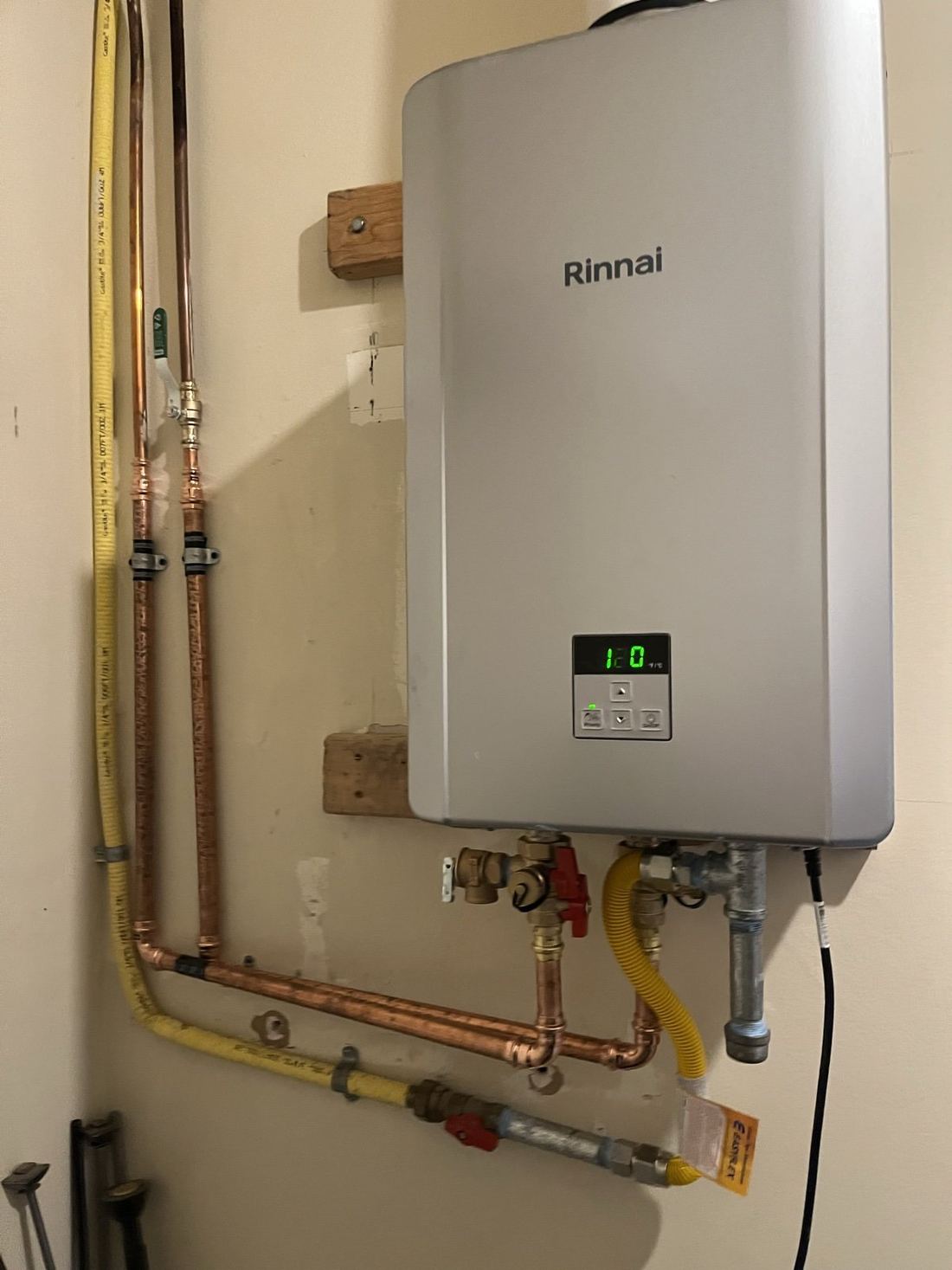
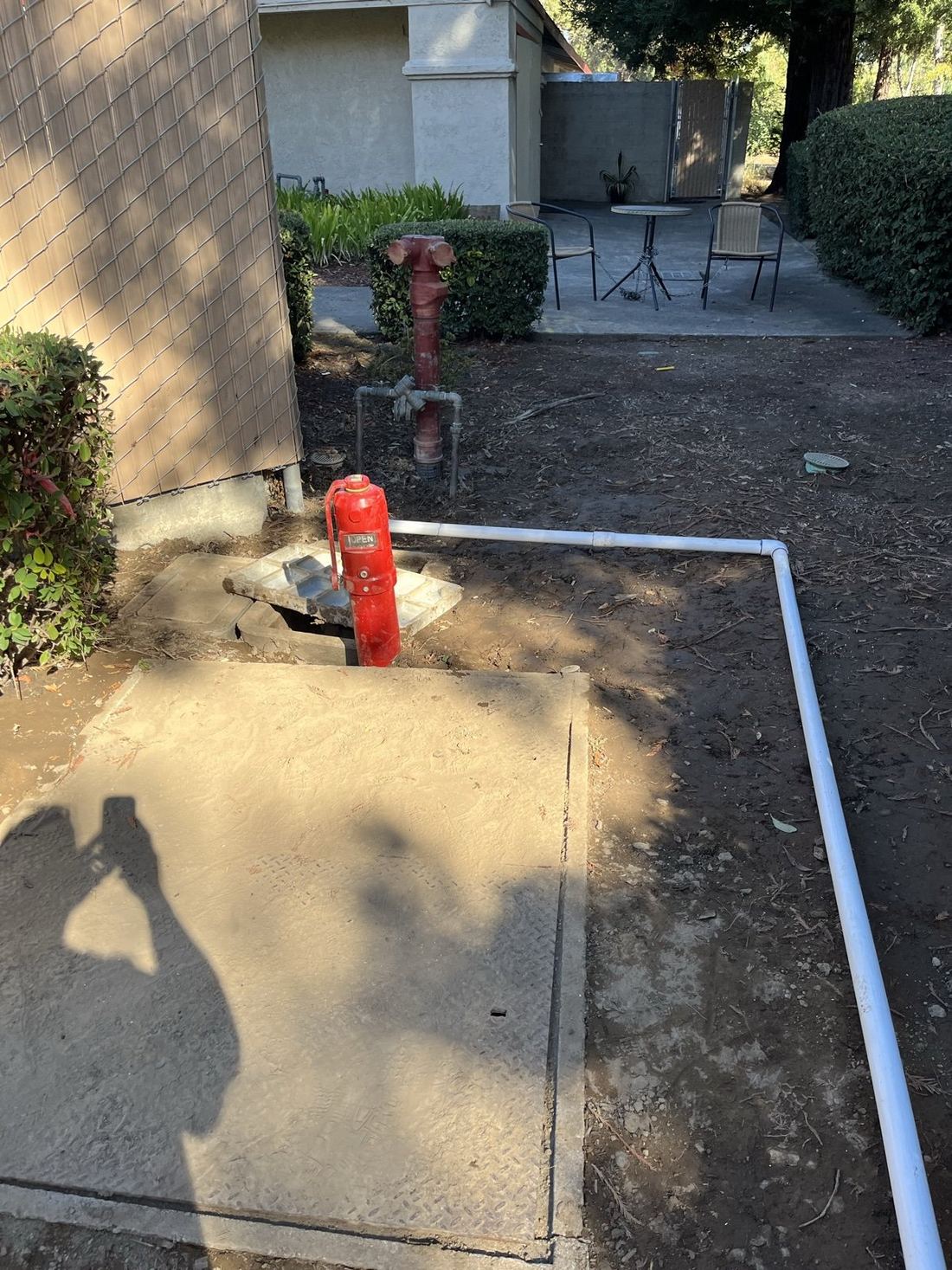
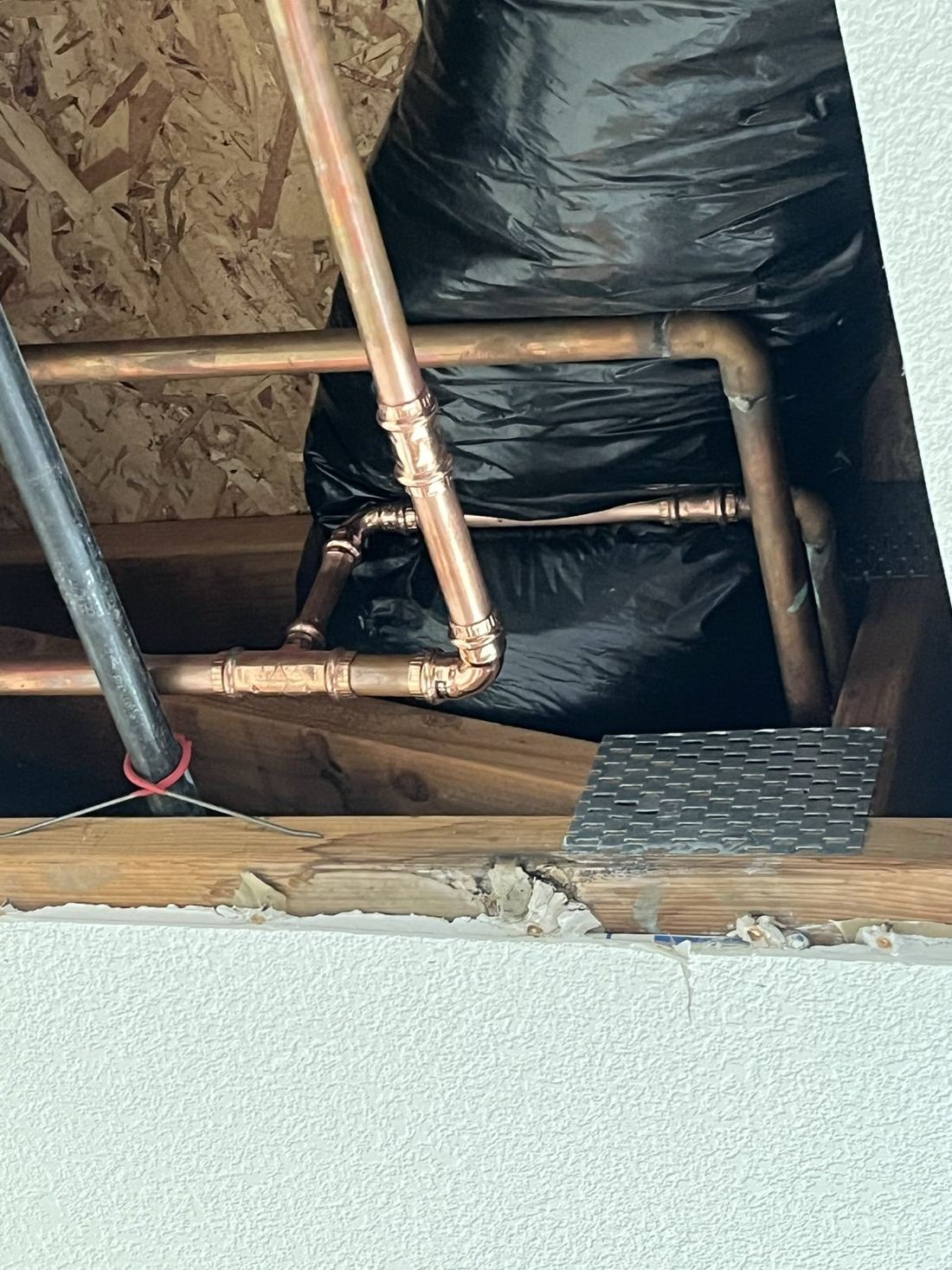
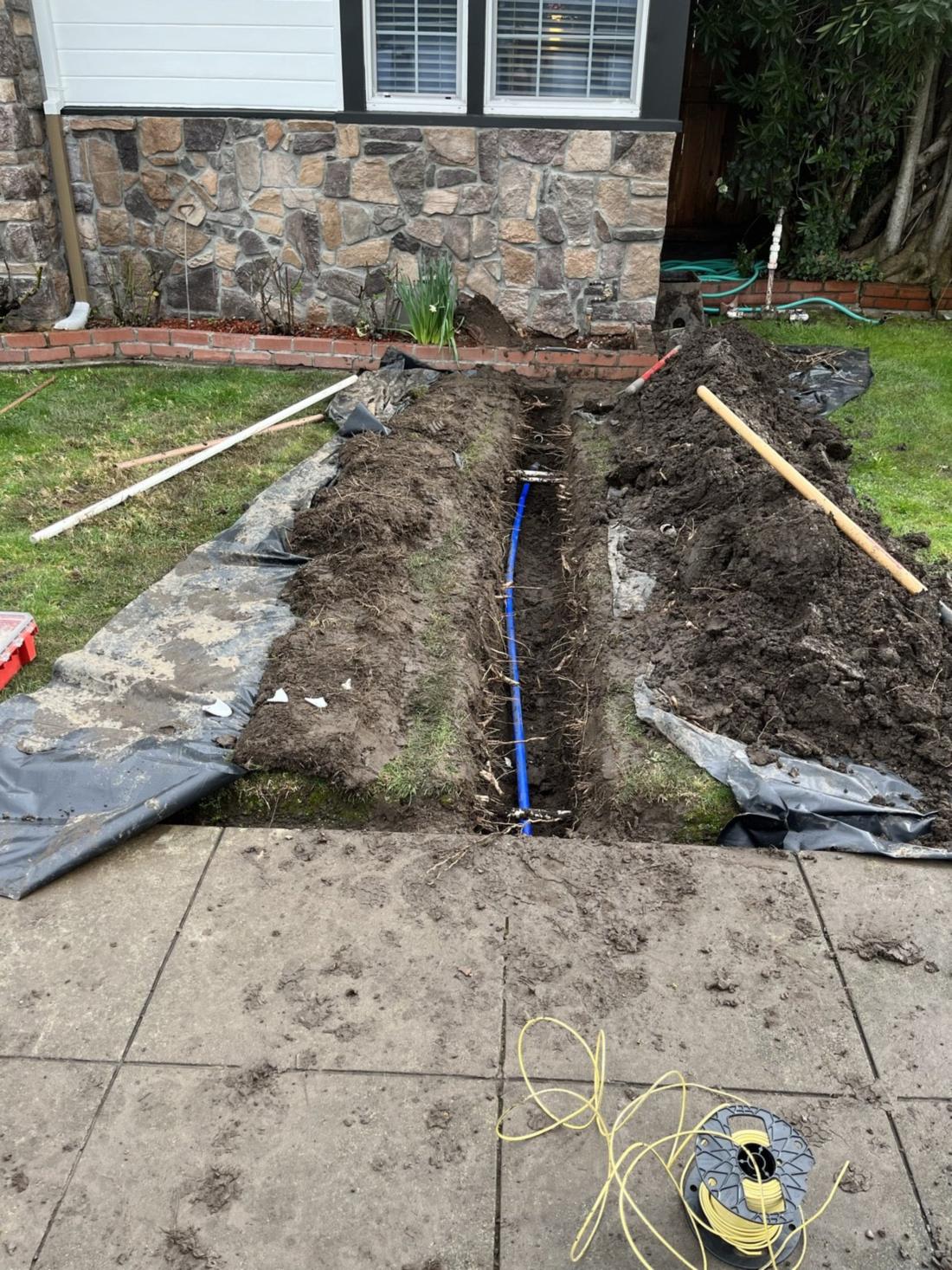
From our job sites, not a stock library.
Questions homeowners actually ask
How long should a water heater last in Sonoma County?
Plan on 8–12 years for a standard tank. Units in garages and exterior closets often reach the top of that range; hard water and skipped maintenance pull it down. If yours is past 10 and acting up, have the repair-vs-replace conversation before you spend on parts.
Is a leaking water heater an emergency?
Water at the base deserves a same-day look, but first check where it’s coming from. A drip at a fitting or the relief valve is usually a minor repair. Water seeping from under the tank jacket means the tank has failed — shut off the cold inlet valve on top and the gas or breaker, and call us.
Do I need an expansion tank?
If your home has a pressure regulator or a check valve at the meter — most newer Sonoma County homes do — California plumbing code requires one when the water heater is replaced. It protects the tank and your fixtures from pressure spikes.
Why does my hot water smell like rotten eggs?
Usually a reaction between the anode rod and naturally occurring bacteria in the water — not a health hazard, but unpleasant. Swapping to a different anode material typically solves it. It does not mean you need a new water heater.
Does Family 1st install the earthquake strapping too?
Yes. California requires two seismic straps on every water heater, and we bring every installation up to current code — strapping, venting, drip pan and expansion tank where required.
Related services
Serving Santa Rosa · Sebastopol · Windsor · Healdsburg · Petaluma · Sonoma — see the full service area.
Dealing with a water heaters problem?
Tell us what you're seeing — we'll tell you what it probably is, and what it takes to fix it right.